By Adam Litster, CPA — Better Biz Info · Originally shared with subscribers of The Profit Shift.
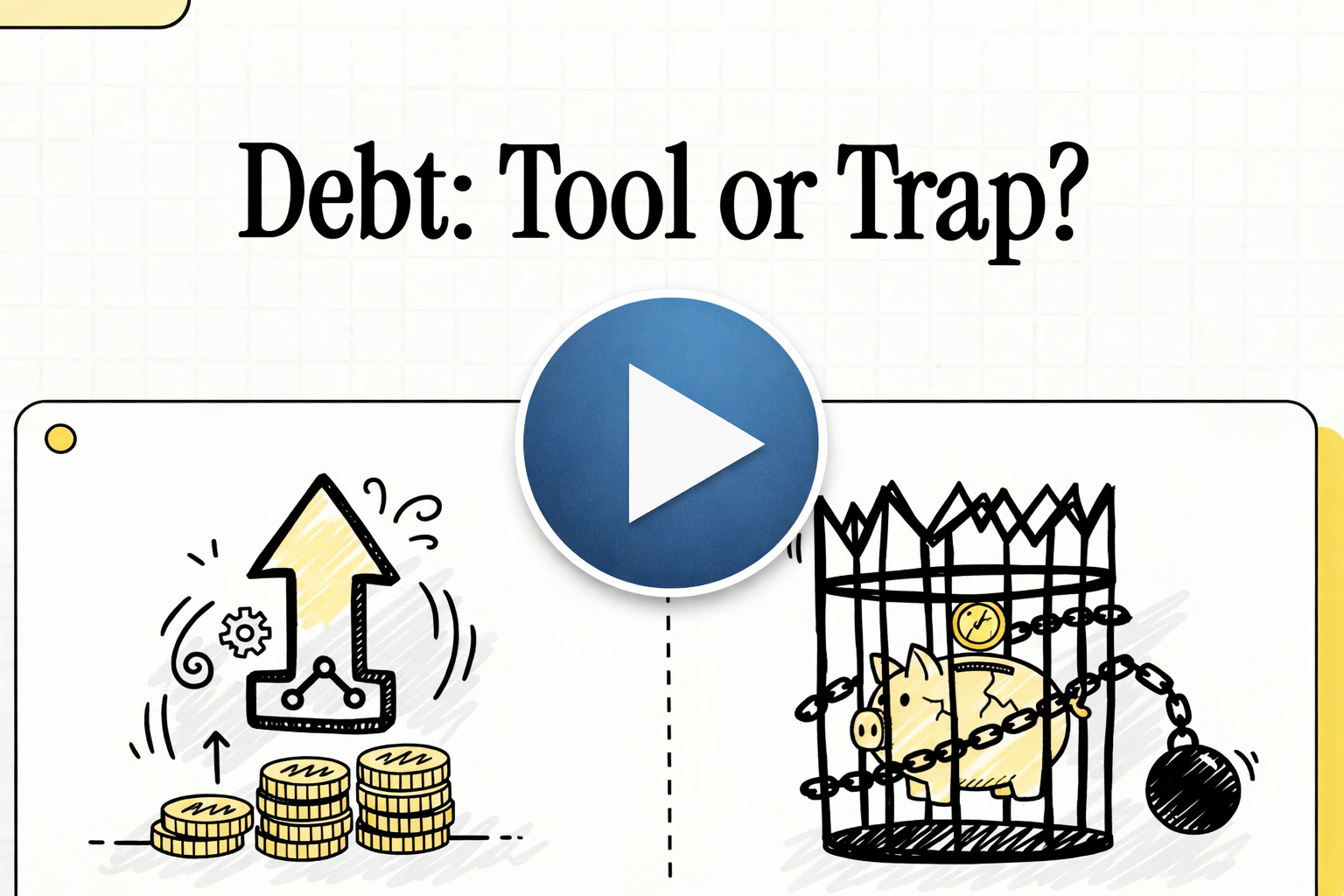
Debt, Tool or Trap? Understand the Difference Before You Sign
Why talk about debt now?
With inflation still seesawing and tariffs changing overnight, many businesses feel their cash cushions evaporate faster than expected. We’ve noticed a sharp rise in owners tempted by instant online loans or credit card floats just to cover payroll. Quick cash can feel like relief, until the payments arrive and profit vanishes.
When a payroll loan becomes an anchor
One client had run lean and profitable, until discipline slipped. Profit and tax transfers paused, expenses crept up, and a sixty thousand dollar payment from their largest customer came in late. Payroll was due Friday. A Stripe cash advance offered funds in minutes. Perfect, the owner thought, I’ll repay as soon as the customer check clears.
The check cleared, urgent bills swallowed it. The Stripe balance lingered. A second loan covered taxes, a credit card swipe paid rent, and soon monthly debt payments were the company’s biggest expense. Stress and sleepless nights followed, proof that the quick fix had become a long term burden.
The three flavors of debt, know what you’re signing up for
Debt isn’t inherently wrong, but its impact depends on why you take it and how it will be repaid. Before borrowing, identify which bucket the loan falls into.
Freeze, reserve, eliminate, a principle based plan
1) Freeze new borrowing and slash non essential spend
2) Build a timing reserve, be your own bank
Open a separate account labeled “Timing.” Transfer 2 to 5 percent of every customer deposit into it. Within a few months, you’ll have cash to cover material purchases, slow receivables, or minor emergencies, without a lender’s fee attached.
3) Eliminate debt with the snowball method
Get this straight to your inbox
The Profit Shift. A short weekly note on profit and cash flow for service business owners.
By Adam Litster, CPA — Better Biz Info · Originally shared with subscribers of The Profit Shift.
Your Money Doesn’t Have to Be a Mystery
Most of the owners I talk to share a quiet, similar feeling about their money.
You work hard. The business does well. Money comes in. But if you stopped and asked where it all actually went last month, you might not be sure. That’s not a knock on you — it’s that the money you earn, the money you owe, and the money you keep all run through one account and blur together.
Here’s the good news: that feeling is almost always a visibility problem, not a you problem — and it’s very fixable. The owners who feel calm and in control aren’t smarter than you; they just look at their numbers more often, and in a way that actually makes sense.
This week I’ll show you how — and hand you a new tool we built that does most of the work for you. Want to see what it produces first?
Why your cash flow can feel like a mystery
For most owners, the reason is simple: you only look at the full picture once a year, at tax time. By then the year is over, and every decision you could have made is in the past.
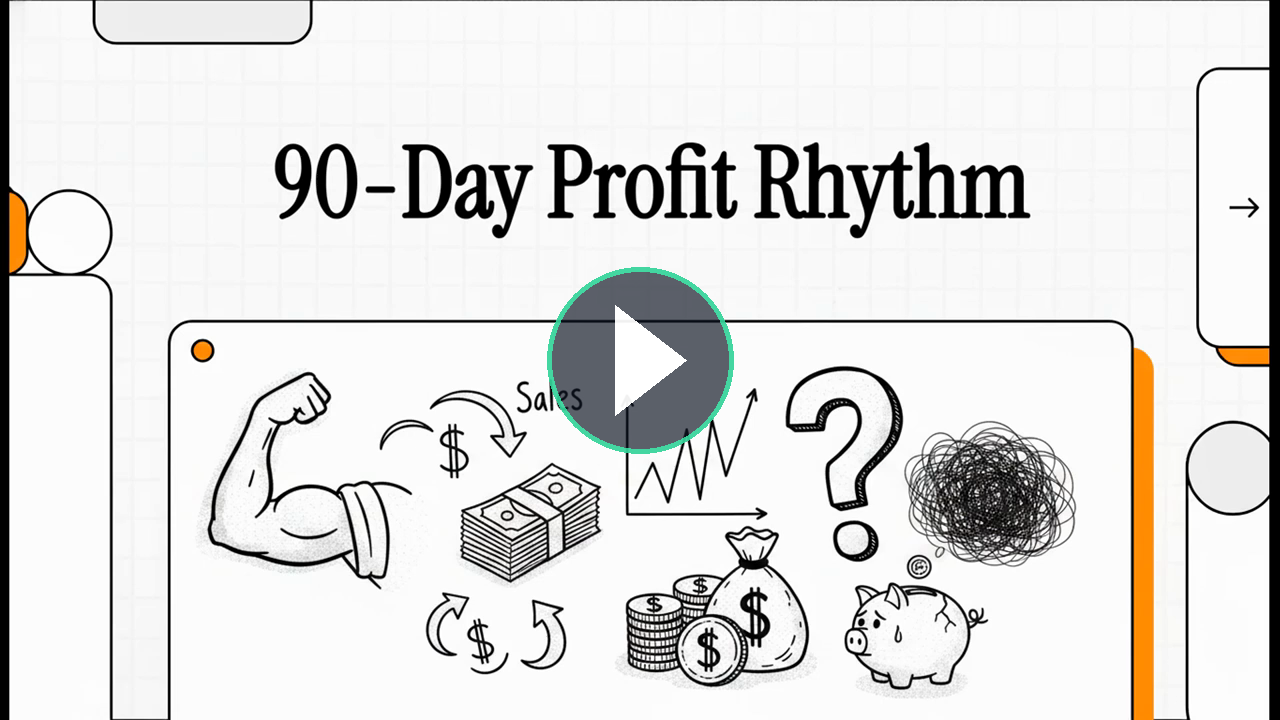
That’s the trap: looking once a year means you’re always reacting to what already happened, never shaping what comes next. It’s the lesson we keep coming back to in The Profit Shift — reacting to your numbers is exhausting and gets you nowhere. A rhythm is what creates calm.
Annual is an autopsy. Quarterly is a check-up.
Ninety days is the sweet spot — long enough to show a real trend, short enough that you can still act on it. It’s also where it starts in our VPS framework : Visibility before Profitability before Scalability. You can’t improve what you pay yourself, your pricing, or your tax surprise until you can see where the money goes.
What a real money review actually looks at
A real review isn’t just glancing at your P&L and feeling vaguely okay. It looks closely at three things:
Owners often see a profit on their Profit and Loss or tax return and wonder why that cash isn’t in the bank. You need real visibility into where the cash actually went. We recommend evaluating your cash flow through the Profit First lens — finding exactly how much cash went toward paying you (the owner), your income taxes, operating costs (including payroll), and what was left over as a real cash profit.
Then walk through your expenses, line by line, sorting each one: Keep, Reduce, or Cut . This is where the quiet leaks hide — forgotten subscriptions, overlapping tools, a loan you’ve never refinanced. The quick wins are usually bigger than owners expect.
You don’t leap to perfect. You nudge your operating expenses 1–2% per quarter toward a healthy target. Tiny, doable moves that compound into real profit over several quarters.
This is built on the Profit First method by Mike Michalowicz — allocate your profit first, and run the business on what’s left.
A sample practice bringing in over $1 million a year was paying its owner just 7.2% of real revenue (healthy is ~20%) and keeping only 3.1% as profit (healthy is ~10%). Operating expenses were quietly eating 86% — when ~55% is normal.
Nothing was “wrong.” The owner just hadn’t been shown the gap.
Meet the tool that does it for you
Here’s the honest catch: doing that whole review by hand takes time most owners don’t have — and many don’t even know where to start. So we built it into a tool that does it for you, with zero effort: the Profit First Instant Assessment .
Here’s how it works: you connect your QuickBooks (read-only — revoke it anytime, and we never store your raw books). Then, in about five minutes, it runs the whole review above and hands you:
It even checks the health and accuracy of your QuickBooks data and flags anything that may need cleanup or a closer look — because your numbers are only as good as the data behind them.
In other words, it turns the most overwhelming part of your finances into a five-minute habit — you go from guessing to knowing , from “I should really look at this” to a clear picture and a short list of next moves. That’s the whole shift: from hoping to steering.
The Profit First Instant Assessment is available now — no subscription, no commitment. Connect QuickBooks, and in about five minutes you’ll have your full profit-and-cash-flow picture, your biggest quick wins, and a clear plan — with branded reports you keep.
And if it’s not useful, we’ll refund you — no questions. See where your money’s really going, or your money back.
Get this straight to your inbox
The Profit Shift. A short weekly note on profit and cash flow for service business owners.
By Adam Litster, CPA — Better Biz Info · Originally shared with subscribers of The Profit Shift.
Tax Season Stress, What to Do Right Now
Tax season can bring up a lot of anxiety and cash flow stress for business owners. Sometimes it’s, “How do i find the right tax person for my business?” Sometimes it’s, “Are they actually helping me, or just putting numbers on forms?” And sometimes it’s the worst one of all, “My return says I made money and owe taxes, but I don’t have the cash” If that’s where you are right now, you are not alone. This week, my goal is to make sure you know that we are here for you, and to give you a clear direction to move forward with confidence.
1) How do I get really good help with my taxes?
A lot of tax accountants are decent at filing returns. Far fewer are great at strategy . Good tax help is not just someone plugging numbers into software. A great tax professional helps you think ahead, avoid mistakes, and make decisions that save taxes without hurting your business .
One red flag I see often, owners are told to buy things they don’t need just to reduce taxes. Sometimes that works on paper, but it can hurt badly in real life if it drains cash you needed for payroll, rent, or operating costs. Need a recommendation for a good tax accountant? We have a list of CPA’s that we have worked with and vetted. Reply to this email and we’ll send you a list of great options!
2) How do I know if my tax accountant is doing a good job?
Here’s a simple test, a good tax accountant should help you feel more clarity and more confidence , not more confusion. They should be helping you make smart tax decisions, not just reacting at filing time.
3) “My taxes say I made a profit, but I don’t have any cash to pay the tax bill”
This is one of the most painful tax season moments, because the return says one thing, but your bank account says something else. You may have profit on paper, but cash got eaten by timing, debt payments, owner draws, or some other unknown expense.
I can’t magically erase a surprise tax bill today, but I can tell you this, there is a way to prevent this from happening again. That solution is Profit First .
Where we can help
We don’t file taxes at our firm, but we help owners get the right support and make sure the tax conversation is actually connected to real business health.
If any of these three questions hit home for you this week, reach out. You don’t have to carry tax season stress by yourself.
The same system that fixed your business can fix your personal money.
By Adam Litster, CPA — Better Biz Info · Originally shared with subscribers of The Profit Shift.
Profit First for Your Personal Life
There’s a particular kind of quiet stress I see all the time in businesses using Profit First.
The business is doing well. The numbers are finally clean, the profit is starting to grow, the owner is getting paid consistently, often for the first time. By every measure we use here, it’s working.
And yet at home? The same is not always true. Many business owners who are doing well in their business still struggle in their personal finances. Money comes in and disappears. There’s debt that never shrinks, bills nobody wants to open, the dread of the bank app — except now it’s the personal account doing the yanking.
If that’s you, you’re not alone — and it doesn’t mean you’re bad with money. It means something simpler and more fixable. Your business and personal life aren’t two separate worlds. They’re one nervous system . When one side is in chaos, the other will inevitably feel the strain also.
We find that it tends to run both ways — because it’s all one system:
Which raises a fair question: if a simple system fixed your business cash, why are you still scrambling at home? Mike Michalowicz — who gave us Profit First — has a new book that answers exactly that.
Why a profitable business can still feel broke at home
Here’s the trap most owners fall into: they treat saving like the leftover. Pay the bills, cover the kids, handle the surprises — and whatever survives the month gets “saved.” Which, as you’ve noticed, is almost nothing.
It’s the same mistake businesses make too often. When profit is treated as leftover, it almost never shows up. When your future is treated as leftover, it doesn’t either.
And willpower won’t save you. Discipline loses to convenience every time. One account, one debit card, one big pile you “manage in your head” — that’s not a budget, that’s a wish.
In The Money Habit , Michalowicz opens his debt chapter with a man whose unopened bills “stacked up like a monument to a dying dream.” His confession: “I was scared of money.” That’s not a math problem — it’s what living without a system does to a person, and it’s the thing we’re going to fix.
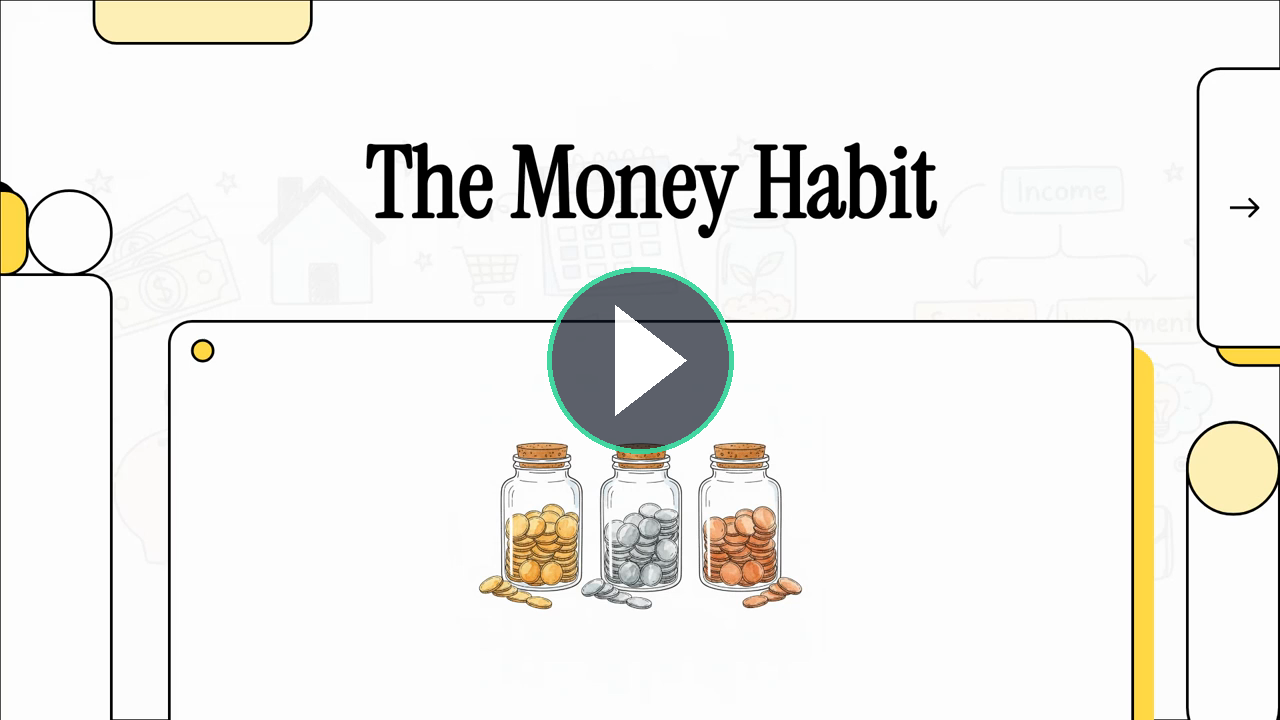
The Money Habit: Profit First for your personal life
The Money Habit by Mike Michalowicz takes the behavioral system that rescued so many businesses and points it at your personal life. The premise: you don’t need a windfall to feel financially safe. You need a habit.
His reframe is one of my favorites:
The break is already in your hands; it just arrives in small, frequent pieces.
That’s the heart of it: small, frequent allocations beat big, rare ones. Frequency rewires your brain — easy wins and rapid reps make the habit stick. Moving $25 every week does more than promising yourself $1,300 “someday.”
If you’ve followed The Profit Shift, this feels familiar. It’s the same lesson we preach about business cash: reacting to the balance is exhausting and gets you nowhere. Building a system creates peace and progress.
The six accounts that give every dollar a job
This is where it gets practical — and where Profit First comes home. Everything flows from one INCOME hub with no debit card; it only disburses to accounts that each have a clear job.
NEEDS covers essentials — housing, insurance, groceries, utilities. WANTS covers the fun — dining, entertainment, clothes. Each gets its own account and card. When a card’s empty, the answer is simple. No more “can I afford this?” math at checkout.
Vacations, investments, the big aspirational stuff. Keep it hidden — ideally a different bank, no card. This is “hide the cookies” for your life. You only move money into WANTS when you’re ready to spend it on purpose — and celebrate it.
While you carry debt, this is FIX — automatic payments crushing what you owe. The day you’re debt-free, you rename it FUTURE and the same auto-transfers build long-term savings. The rule that matters: never run debt payoff and saving at the same time. One focus at a time is what makes the habit stick.
Six accounts. One income hub. Every dollar with a job before it wanders off. Sound like anything we talk about around here?
Know your season — and what to do this week
One more idea worth borrowing: pick one focus per season . Knee-deep in debt (FIX) is a different game than building wealth (FUTURE), and trying to do both at once is exactly why most people stall.
Match your moves to where you actually are. That’s not settling — it’s the focus that finally gets you somewhere. And remember the point: money isn’t for hoarding. The book lands on a line I keep coming back to — “go get your moments.” A system at home isn’t about spreadsheets. It’s about funding the moments that matter to you and your family, without the dread.
And if your business and personal money both feel like they’re yanking you around at once, that’s exactly the knot we untangle every day. Reply to this email or book a free financial review — we’ll look at both sides of your one system and build you a plan that brings the calm back.
Every week I talk to exhausted owners who give everything to their business and still take home scraps. I have lived versions of that grind myself, long hours, missed moments, and a creeping doubt that this is just how business works. It isn’t.
Over the next four weeks we are going to flip the script with the four Profit First behavior principles, Small Plates, Sequence, Remove Temptation, and Rhythm. The goal is simple, permanent profit, calmer cash flow, and a business that funds your life instead of draining it.
The Small-Plates Analogy
Fifty years ago, dinner plates were smaller. We were taught to fill the plate and finish it. As plates grew, portions expanded too. The environment nudged the behavior, bigger plate, bigger serving.
Money behaves the same way. Parkinson’s Law says we use whatever capacity is available. One big checking account is one big plate, so spending swells to match it.
Profit First fixes the environment. We shrink the plate by splitting cash into separate accounts so every dollar has a job and the “excess” is not up for grabs.
The Five Core Accounts
Income — where all customer deposits come in. Funds are allocated from here to the core accounts below.
Profit — the business’s longevity and the owner’s reward for taking the risk.
Owner’s Comp — you get paid on purpose, not if anything is left.
Tax — the government’s share, quarantined so it cannot ambush you later.
Operating Expenses — what remains, the real budget to run the company.
Constraint Creates Creativity
I don’t just want you profitable, I want you to feel confident in your business. Profit First is a cash flow system, but it also turns you into a smarter business owner.
Smarter decisions. A smaller OpEx plate forces better choices, you cut noise and focus on what moves the needle.
Renegotiate what is bloated. Trim commitments, reduce scope, and buy only what supports delivery.
Streamline delivery. Simplify processes, remove bottlenecks, and free time for higher-value work.
Focus upmarket. Spend your best energy on higher-value clients and offers.
Constraint isn’t punishment—it’s the spark that builds wisdom and confidence.
The Non-Negotiable
Here’s the number one rule though: When the OpEx account hits zero, you stop spending.
If you do not have enough to pay every bill this cycle, your business is waving a red flag: it can’t afford all those bills. Pause, cut ruthlessly, renegotiate, reduce scope, and wait for new deposits.
Do not raid Profit or Tax, do not rely on debt or credit cards. That is how the cycle breaks. You cannot afford to over-extend your business anymore.
Try This Week
Start small. Open one new bank account and call it Profit. Automatically move 1 to 2% of every deposit into it for the next 30 days. Treat it as untouchable and watch how your decisions change and your peace of mind grows.
“Profit First gave me clarity and confidence with cash flow. I finally feel in control.”
What’s Next?
Next week, we cover Sequence, the order of money movement that builds momentum without chaos. Then we will dive into Remove Temptation and Rhythm to lock in permanent profit.
Framework Summary
V
VISIBILITY Learn the power of accurate information.
P
PROFITABILITY Grow your cash using disciplined expense control.
S
SCALABILITY Create a market-dominating position through your offer.
Take Your Free Profit Snapshot™
Find your profit potential in minutes — see your current profit health, cash flow insight, and a simple action plan to move forward.