
Do You Have an Exit Strategy—and a Legacy?

Do You Have an Exit Strategy—and a Legacy?

Do You Have an Exit Strategy—and a Legacy?

💡 Tip-of-the-Week

Block 30 minutes to draft your legacy statement, then pick one process to document this week (intake, billing, or fulfillment). Small, repeatable wins make businesses sellable—and sustainable.

Quick Take

An exit strategy is your plan to sell or step out on purpose—not under pressure. But an exit isn’t only a transaction; it’s your legacy. Whether you sell to a third party, pass the company to family, or transition it to your team, the value you create now—profit, focus, and systems—determines both your selling price and what the business can do for people long after you’re gone.

Legacy Lens (why start now)

Ask yourself: What do I want this business to stand for in 10 years if I am not here anymore?

The companies that sell well and serve well are:

  • Profitable by design (Profit First allocations on every deposit),
  • Focused on top customers with a clear unique offering, and
  • Systemized so the business runs without the owner.

That’s the Pumpkin Plan “three vines” work—and it takes time, typically 18–36 months.

A Tale of Two Businesses

When waiting costs everything

A recent home-services client of ours had a tough run over the last few years—some poor decisions, too much debt, and overhead that crushed margins. Burned out, they called brokers to sell fast and hopefully just start over. The offers were unfortunately predictable: list-purchases only—enough to clear debt, but nothing meaningful left for the owner. Why? Little profit, heavy fixed costs, owner-dependent operations, and no documented systems. After careful consideration and soul searching, they decided to pause the sale, implement Profit First to rebuild cash and consistency, prune overhead, and use Pumpkin Plan to tighten the unique offering, re-center on top clients, and document delivery. Then sell later—stronger.

When prep wins

Another top client of ours in the Chiropractic industry had been losing money for 17 years before finding us. They loved their practice and wanted it to work, so we made a plan together to make their practice the best it could be. We started with Profit First—profit, owner pay, tax, and operating allocations on every deposit. Within six months the practice was profitable. Then we worked the Pumpkin Plan: identify top patients, refine the unique offering (deeper specialty, premium experience), and systemize everything (intake, care plans, follow-ups, operations). Over three years, profit climbed, owner pay grew exponentially, team execution improved, and multiple seven-figure offers arrived. Options appeared because the business produced predictable profit without the owner at the center.

What to Do Next (18–36 Months)

🏦

Profit First on autopilot: Auto-allocate every deposit (profit, owner pay, tax, ops).

🎯

Double down on your Sweet Spot: Narrow to your unique offering + top customers; systematize.

✂️

Run lean & clean: Cut fixed overhead, simplify debt, and keep a steady operating reserve.

Bottom line

Exits that honor your legacy—and pay you well—are built years in advance. Start now: profit, focus, systems.

Get Help With Your Exit Strategy Now!

See you next week!

Adam Litster
Certified Profit First Professional and Pumpkin Plan Strategist
816-500-5779
adam@betterbizinfo.com
www.betterbizinfo.com


Framework Summary

V

VISI​BILITY

Learn the power of accurate information

P

PROFIT​ABILITY

Grow your cash using a powerful expense control and management technique

S

SCAL​ABILITY

Create a market-dominating position through your powerful offer

📋

Free Business Health Assessment

Take the Free Assessment

© 2025 Entrepreneur Newsletter. All rights reserved. | Better Biz Info | Facebook | LinkedIn

Early Debt Eradication: Snowball vs. Avalanche

Early Debt Eradication: Snowball vs. Avalanche

💡 Tip-of-the-Week

Pick your debt reduction method today, and name your first target balance. Momentum beats perfection.

In This Issue

  • The two fastest ways to kill debt, snowball vs. avalanche
  • How to choose the best method for you
  • A 7-day quick start plan
  • Video: Best Way to Pay Off Debt Fast, link at the end

Quick Take

There are two proven ways to pay off debt faster:

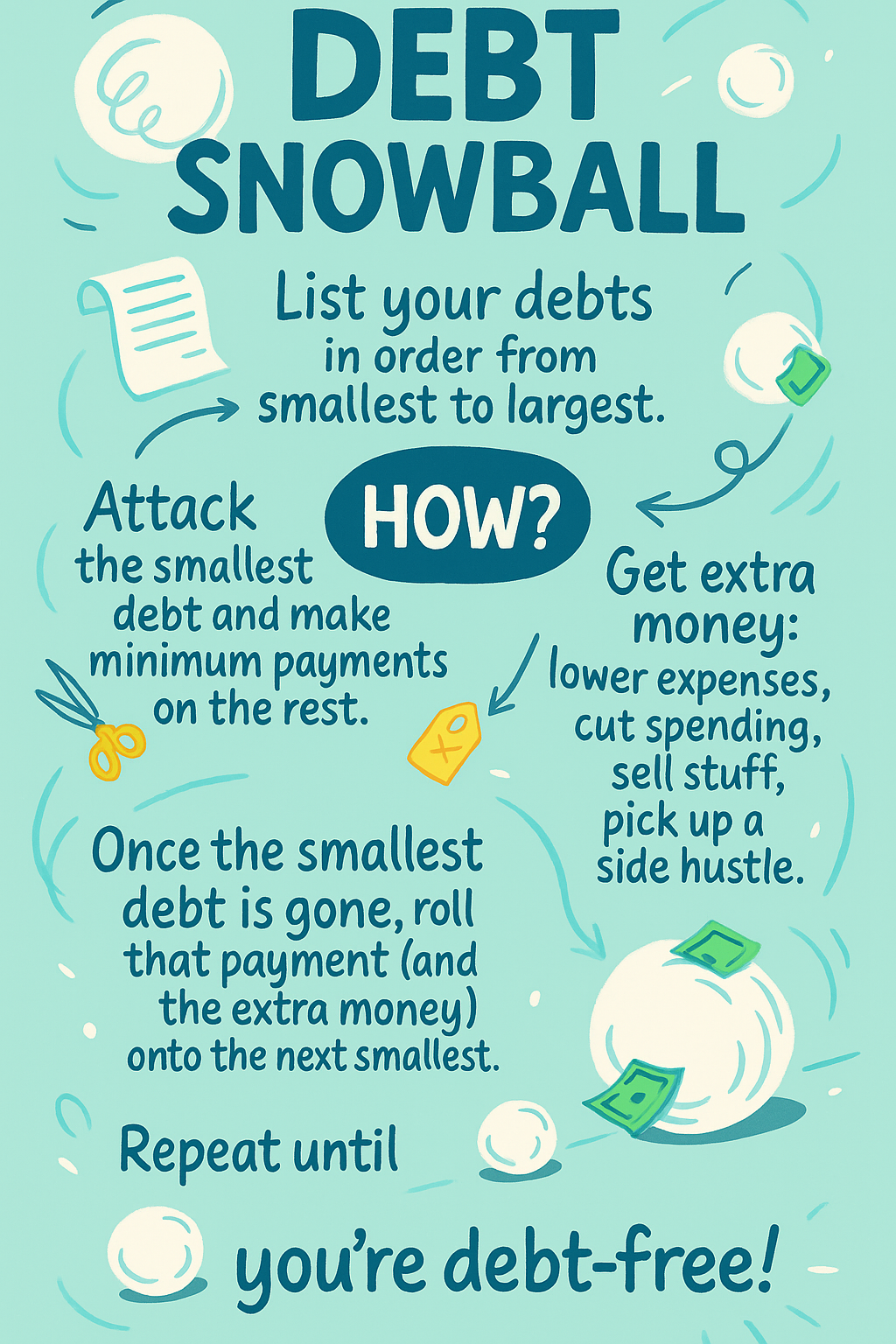
  • Snowball: Pay the smallest balance first for quick wins and momentum.
  • Avalanche: Pay the highest interest rate first to minimize total interest paid.

Why these work

Both methods keep minimums on all debts, and focus extra cash on one target balance at a time. When that target is gone, you roll its payment to the next target. The difference is what you target first, smallest balance, or highest interest.

Which should you choose?

  • Choose Snowball if motivation and visible progress help you stay consistent. You will rack up early wins, which keeps you engaged and on track.
  • Choose Avalanche if you are numbers-driven and patient. You will usually pay less interest overall, even if the first win takes longer.

We have generally favored the Snowball method as it gets you out of debt faster than any other debt reduction strategy. The key is to freeze any addition of new debt, cut expenses ruthlessly, and attack debt as much as possible.

Debt Method Infographic

7-Day Quick Start

  • Day 1–2: List every non-mortgage debt, balance, minimum payment, interest rate.
  • Day 3: Pick your method, snowball or avalanche, and the first target.
  • Day 4: Set an automatic “debt killer” transfer every payday.
  • Day 5–6: Trim one recurring cost, add those dollars to your target.
  • Day 7: Celebrate progress, schedule a 15-minute weekly check-in to review and roll payments.

Check out this video for a more in-depth review of the Snowball method:

If you cannot see the player above, click here to watch on YouTube.

See you next week!

Adam Litster
Certified Profit First Professional and Pumpkin Plan Strategist
816-500-5779
adam@betterbizinfo.com
www.betterbizinfo.com

Framework Summary

V

VISIBILITY

Learn the power of accurate information

P

PROFITABILITY

Grow your cash using a powerful expense control and management technique

S

SCALABILITY

Create a market-dominating position through your powerful offer

📋

Free Business Health Assessment

© 2025 Entrepreneur Newsletter. All rights reserved.

Facebook | LinkedIn

Did you know there is good debt and bad debt? A Quick, Practical Guide

Did you know there is good debt and bad debt? A Quick, Practical Guide

Most debt hurts more than it helps, the difference comes down to why you borrow and how repayment works. In uncertain markets, quick loans can feel like relief, yet they often turn today’s stress into tomorrow’s interest bill. Use this simple guide to tell good debt from bad.


✅ Good Debt, Rare but Useful: Investment Debt

Purpose: Buy an asset that reliably earns more than the loan costs.

  • When it’s OK: The asset’s cash flow covers principal and interest, with a cushion, even if sales slow.
  • Examples: Capacity-boosting equipment, a carefully modeled acquisition.
  • Red flags: “Volume will fix it,” “We’ll figure out repayment later.”

🚫 Debt to Avoid, Most Common: Operating-Gap Debt

Timing debt: Using lines of credit or credit cards to “bridge” receivables. Timelines slip, balances linger, interest eats your margin.

Frivolous debt: Quick advances, for example Stripe or QuickBooks, credit cards, or factoring to cover payroll, rent, routine bills. This creates no new revenue, adds fees, and amplifies next month’s stress.

Good vs Bad Debt illustration


What to Do Instead

  • Freeze new borrowing while you stabilize.
  • Build a timing reserve: Sweep 1–5% of every deposit into a separate account, be your own bank.
  • Snowball payoff: Pay minimums on all debts, attack the smallest principal first, roll those payments forward.

Bottom Line

Borrow to build value, not to buy time. If the asset cannot repay the loan by itself, with room to spare, do not sign.


Want Help Paying Off Debt Faster?

If you would like a tailored payoff plan, including a snowball schedule, vendor renegotiation scripts, and reserve setup, schedule a free strategy session below.

Pro tip, set your reserve transfer as an automatic sweep, consistency beats intensity.

Why Integrating AI into Your Business Isn’t Optional Anymore

Why Integrating AI into Your Business Isn’t Optional Anymore

💡 Tip-of-the-Week

Ask your AI model to interview you!

Prompt it with something like:

“Ask me 20 questions to get to know my voice, goals, and style.”

Answer in detail. This helps the AI learn your tone and thought process, so future interactions are that much smoother.

In This Issue

  • Why AI Matters for Today’s Businesses
  • My Personal AI Journey—and How It Changed My Workflow
  • Practical Ways AI Can Help You Work Smarter (Even If You’re a Small Team)
  • Addressing Accuracy & Authenticity Concerns

It seems like we cannot go a day without hearing about artificial intelligence anymore. I used to be skeptical. I wasn’t sure how well it could capture my voice or bring real value to my daily operations. But after months of experimenting with AI tools—like ChatGPT—I’m convinced they’re not just nice-to-have; they’re essential for staying competitive. Whether it’s researching faster, drafting emails, brainstorming strategy, or creating content that resonates, AI has become a powerful ally for building a resilient business.

My Personal AI Journey

A few months ago, I started small with ChatGPT. At first, the results were clunky and often robotic. But I soon realized the key: the more context I gave—about my brand, my tone, and my goals—the better it became. Over time, ChatGPT began to sound like me. Now, instead of hours rewriting, I get accurate, persuasive drafts in seconds—needing only minor edits.

5 Ways You Can Use AI to Streamline Your Small Business

  1. Content Creation & Editing: Draft blog posts, newsletters, or social media, then fine-tune in your own voice.
  2. Customer Communication: Automate FAQs or simple inquiries, freeing up time for complex needs.
  3. Idea Generation & Strategy: Use AI as a creative partner for new product ideas or marketing angles.
  4. Admin & Scheduling Help: AI-powered tools can manage calendars, appointments, and to-do lists.
  5. Data Insights: Many tools now include built-in AI to spot trends, forecast sales, or flag inefficiencies.

Addressing Accuracy & Authenticity Concerns

People often worry that AI sounds robotic or inaccurate. I felt the same at first. The truth is, AI can make mistakes if left on autopilot. But it’s a learn-by-doing tool. The more I guided it with my tone, preferences, and corrections, the better it became. Now, it feels like an extension of my thinking. In other words, AI becomes more “human” the more human guidance it receives.

The Bottom Line

AI isn’t just a flashy trend. It’s a tool that can supercharge your efficiency, creativity, and competitive edge—once you train it. Don’t stay stuck while others move forward. Embrace AI now, and watch it help you work smarter, not harder. With authenticity in your hands, AI becomes an invaluable assistant that amplifies your voice, not replaces it.

📋 Free Business Health Assessment

Ready to get actionable insights into your business’s strengths and weaknesses? Take our free Business Health Assessment to receive personalized recommendations and a clear roadmap to improve your company’s health.

© 2025 Entrepreneur Newsletter · Facebook | LinkedIn

Resilient in Uncertain Times: The 3 Keys to Protect Your Business

Resilient in Uncertain Times: The 3 Keys to Protect Your Business

💡 Tip-of-the-Week · Resilience Edition

Adopt the “3 Keys in 30 Days” challenge:

  1. Pick a weekly time to review your numbers, and write down one insight you will act on.
  2. Turn on an automatic profit transfer for every deposit, even 1% to start.
  3. Cancel, downgrade, or renegotiate one fixed cost this week.

Small moves, done consistently, build a business that can take a punch and keep moving forward.


In This Issue

  • Has volatility hit your pipeline? Why it doesn’t have to sink your business
  • The 3 keys to a resilient, “recession-proof” company
  • Client story: profits up, despite a bumpy year
  • How to start protecting your business this week

When the Economy Gets Choppy

This year has been a rollercoaster, tariffs moving targets, global conflicts, jittery markets. Many of our clients in elective industries, events, lawn care, and specialty services, have seen slower lead flow in 2025 than in 2024. The result can be brutal: cash gets tight, confidence dips, and the stress follows you home.

But a downturn doesn’t have to dictate your destiny. Regardless of where you are today, you can reduce the risk, and blunt the impact of economic swings, by tightening three fundamentals.

The 3 Keys to a Resilient Business

  1. Visibility: Get your finger on the pulse, early. When you clearly understand where money is coming from, where it is going, and which trends are forming, you can act before issues escalate. Visibility means you can read your financials, not just receive them, spot shifts in sales and spending, and separate signal from noise. Without that clarity, you only “see” the problem when it is already a cash crisis, and by then you are in damage-control mode, not strategy mode.
  2. Profitability: Treat profit as the primary health metric, not revenue. Top-line growth feels good, but bottom-line profit pays your personal bills and funds your future. When profit is secured up front, Profit First style, you gain decision freedom, time to work on the business, and the resilience to absorb shocks. In volatile markets, margin discipline beats volume every time.
  3. Lean Overhead: Keep fixed costs light and flexible. Variable costs fall when revenue dips, fixed costs generally do not. Heavy overhead often crushes companies in a downturn. A lean, optimized cost base gives you room to breathe and time to adapt. Audit every recurring commitment, keep what creates value, renegotiate what is mispriced, and remove what is unnecessary.

A Client Story: Profits Up in a Down Year

One client runs an event-management company, an industry that lives and dies by discretionary spending. 2025 started choppy: cautious customers, longer decision cycles, fewer inbound leads. Seven months in, we reviewed their year-to-date numbers and found something surprising: profitability had doubled versus the same period in 2024.

What changed?

  • Visibility first. We established a rhythm of reviewing financial statements and cash trends so the owner could see small shifts early and make targeted adjustments.
  • Profit secured up front. We implemented Profit First, automated allocations for profit, owner pay, tax, and operating expenses on every deposit, so profit would not be an afterthought.
  • Seasonal reserve, by design. We calculated the exact monthly cash needed for fixed costs. Once monthly sales covered that number, including profit, tax, and owner’s pay targets, every extra dollar flowed into a reserve account to fund months where revenue was not sufficient to cover fixed costs.
  • Overhead overhaul. Line by line, we evaluated vendors and spend for actual value. We looked for value in every dollar spent and cut or reduced anything that was not providing sufficient value. The result: a 50% reduction in overhead year over year, without hurting client experience.

The outcome: more cash in reserve, six months and growing, healthier margins, and real peace of mind. With stability restored, we are mapping a plan for 2026—on offense, not defense.

How to Start This Week

  • Book an hour with your numbers. Do not just look, interpret. What changed in sales mix, pricing, job costs, or overhead over the last 60 days?
  • Protect profit. Even 1–2% to start creates momentum and confidence.
  • Trim fixed costs. One unnecessary recurring commitment removed is relief every single month.

The Bottom Line

You cannot control tariffs, headlines, or market jitters. You can control seeing the truth in your numbers early, locking in profit before you spend, and keeping overhead agile. Do those three things consistently and volatility becomes a headwind you are built to handle, not a wave that knocks you over.