The same system that fixed your business can fix your personal money.
By Adam Litster, CPA — Better Biz Info · Originally shared with subscribers of The Profit Shift.
Profit First for Your Personal Life
There’s a particular kind of quiet stress I see all the time in businesses using Profit First.
The business is doing well. The numbers are finally clean, the profit is starting to grow, the owner is getting paid consistently, often for the first time. By every measure we use here, it’s working.
And yet at home? The same is not always true. Many business owners who are doing well in their business still struggle in their personal finances. Money comes in and disappears. There’s debt that never shrinks, bills nobody wants to open, the dread of the bank app — except now it’s the personal account doing the yanking.
If that’s you, you’re not alone — and it doesn’t mean you’re bad with money. It means something simpler and more fixable. Your business and personal life aren’t two separate worlds. They’re one nervous system . When one side is in chaos, the other will inevitably feel the strain also.
We find that it tends to run both ways — because it’s all one system:
Which raises a fair question: if a simple system fixed your business cash, why are you still scrambling at home? Mike Michalowicz — who gave us Profit First — has a new book that answers exactly that.
Why a profitable business can still feel broke at home
Here’s the trap most owners fall into: they treat saving like the leftover. Pay the bills, cover the kids, handle the surprises — and whatever survives the month gets “saved.” Which, as you’ve noticed, is almost nothing.
It’s the same mistake businesses make too often. When profit is treated as leftover, it almost never shows up. When your future is treated as leftover, it doesn’t either.
And willpower won’t save you. Discipline loses to convenience every time. One account, one debit card, one big pile you “manage in your head” — that’s not a budget, that’s a wish.
In The Money Habit , Michalowicz opens his debt chapter with a man whose unopened bills “stacked up like a monument to a dying dream.” His confession: “I was scared of money.” That’s not a math problem — it’s what living without a system does to a person, and it’s the thing we’re going to fix.
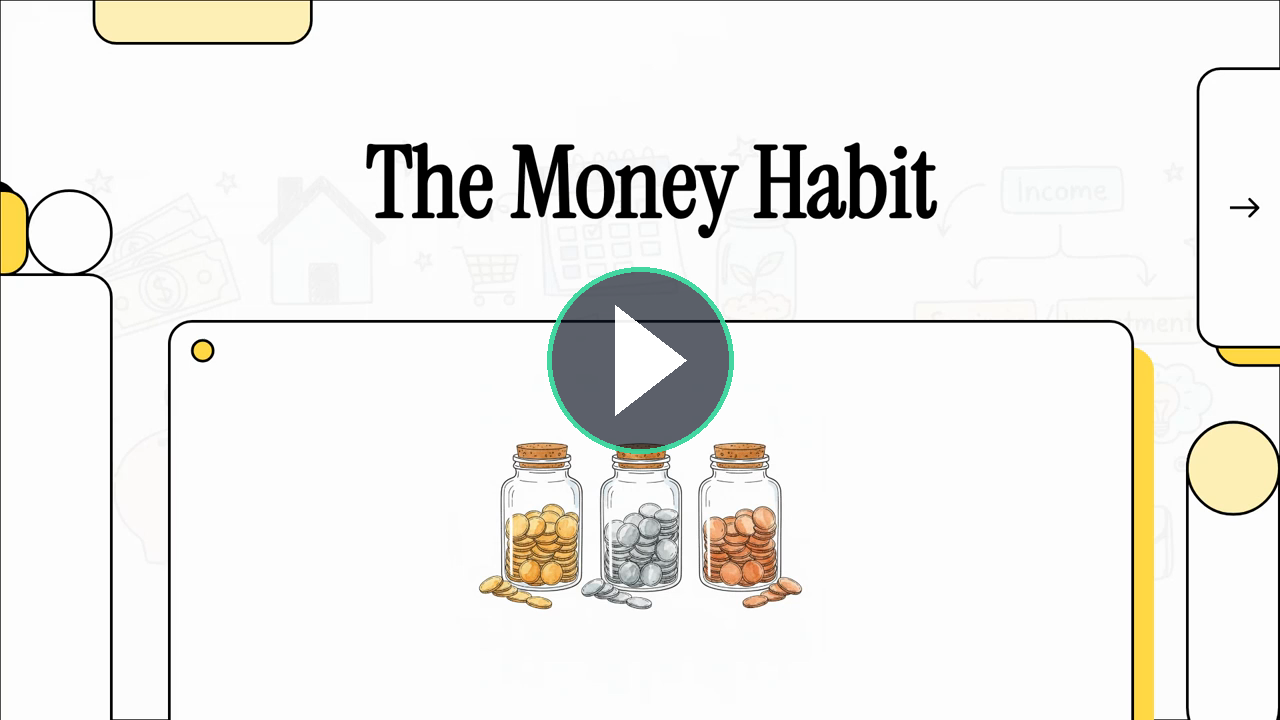
The Money Habit: Profit First for your personal life
The Money Habit by Mike Michalowicz takes the behavioral system that rescued so many businesses and points it at your personal life. The premise: you don’t need a windfall to feel financially safe. You need a habit.
His reframe is one of my favorites:
The break is already in your hands; it just arrives in small, frequent pieces.
That’s the heart of it: small, frequent allocations beat big, rare ones. Frequency rewires your brain — easy wins and rapid reps make the habit stick. Moving $25 every week does more than promising yourself $1,300 “someday.”
If you’ve followed The Profit Shift, this feels familiar. It’s the same lesson we preach about business cash: reacting to the balance is exhausting and gets you nowhere. Building a system creates peace and progress.
The six accounts that give every dollar a job
This is where it gets practical — and where Profit First comes home. Everything flows from one INCOME hub with no debit card; it only disburses to accounts that each have a clear job.
NEEDS covers essentials — housing, insurance, groceries, utilities. WANTS covers the fun — dining, entertainment, clothes. Each gets its own account and card. When a card’s empty, the answer is simple. No more “can I afford this?” math at checkout.
Vacations, investments, the big aspirational stuff. Keep it hidden — ideally a different bank, no card. This is “hide the cookies” for your life. You only move money into WANTS when you’re ready to spend it on purpose — and celebrate it.
While you carry debt, this is FIX — automatic payments crushing what you owe. The day you’re debt-free, you rename it FUTURE and the same auto-transfers build long-term savings. The rule that matters: never run debt payoff and saving at the same time. One focus at a time is what makes the habit stick.
Six accounts. One income hub. Every dollar with a job before it wanders off. Sound like anything we talk about around here?
Know your season — and what to do this week
One more idea worth borrowing: pick one focus per season . Knee-deep in debt (FIX) is a different game than building wealth (FUTURE), and trying to do both at once is exactly why most people stall.
Match your moves to where you actually are. That’s not settling — it’s the focus that finally gets you somewhere. And remember the point: money isn’t for hoarding. The book lands on a line I keep coming back to — “go get your moments.” A system at home isn’t about spreadsheets. It’s about funding the moments that matter to you and your family, without the dread.
And if your business and personal money both feel like they’re yanking you around at once, that’s exactly the knot we untangle every day. Reply to this email or book a free financial review — we’ll look at both sides of your one system and build you a plan that brings the calm back.
Every week I talk to exhausted owners who give everything to their business and still take home scraps. I have lived versions of that grind myself, long hours, missed moments, and a creeping doubt that this is just how business works. It isn’t.
Over the next four weeks we are going to flip the script with the four Profit First behavior principles, Small Plates, Sequence, Remove Temptation, and Rhythm. The goal is simple, permanent profit, calmer cash flow, and a business that funds your life instead of draining it.
The Small-Plates Analogy
Fifty years ago, dinner plates were smaller. We were taught to fill the plate and finish it. As plates grew, portions expanded too. The environment nudged the behavior, bigger plate, bigger serving.
Money behaves the same way. Parkinson’s Law says we use whatever capacity is available. One big checking account is one big plate, so spending swells to match it.
Profit First fixes the environment. We shrink the plate by splitting cash into separate accounts so every dollar has a job and the “excess” is not up for grabs.
The Five Core Accounts
Income — where all customer deposits come in. Funds are allocated from here to the core accounts below.
Profit — the business’s longevity and the owner’s reward for taking the risk.
Owner’s Comp — you get paid on purpose, not if anything is left.
Tax — the government’s share, quarantined so it cannot ambush you later.
Operating Expenses — what remains, the real budget to run the company.
Constraint Creates Creativity
I don’t just want you profitable, I want you to feel confident in your business. Profit First is a cash flow system, but it also turns you into a smarter business owner.
Smarter decisions. A smaller OpEx plate forces better choices, you cut noise and focus on what moves the needle.
Renegotiate what is bloated. Trim commitments, reduce scope, and buy only what supports delivery.
Streamline delivery. Simplify processes, remove bottlenecks, and free time for higher-value work.
Focus upmarket. Spend your best energy on higher-value clients and offers.
Constraint isn’t punishment—it’s the spark that builds wisdom and confidence.
The Non-Negotiable
Here’s the number one rule though: When the OpEx account hits zero, you stop spending.
If you do not have enough to pay every bill this cycle, your business is waving a red flag: it can’t afford all those bills. Pause, cut ruthlessly, renegotiate, reduce scope, and wait for new deposits.
Do not raid Profit or Tax, do not rely on debt or credit cards. That is how the cycle breaks. You cannot afford to over-extend your business anymore.
Try This Week
Start small. Open one new bank account and call it Profit. Automatically move 1 to 2% of every deposit into it for the next 30 days. Treat it as untouchable and watch how your decisions change and your peace of mind grows.
“Profit First gave me clarity and confidence with cash flow. I finally feel in control.”
What’s Next?
Next week, we cover Sequence, the order of money movement that builds momentum without chaos. Then we will dive into Remove Temptation and Rhythm to lock in permanent profit.
Framework Summary
V
VISIBILITY Learn the power of accurate information.
P
PROFITABILITY Grow your cash using disciplined expense control.
S
SCALABILITY Create a market-dominating position through your offer.
Take Your Free Profit Snapshot™
Find your profit potential in minutes — see your current profit health, cash flow insight, and a simple action plan to move forward.
Profit First Coaching — Cash Control with a Mentor
Implement Profit First with guides who work with you to create permanent profitability in your business. We teach you using your language, empower you to reach your goals, and help you hit owner-pay & profit targets with confidence.
Profit First setup, analysis & training
Mentorship to make you smarter with your money
Accountability partner to keep you moving toward your goals
I see this every week: devoted entrepreneurs pouring everything into their customers, then watching cash leave as fast as it arrives. The deposit hits—and before the relief can settle, the stack of bills steps forward.
Payroll. Rent. Software. Everyone gets paid but the person carrying the weight. That pain isn’t failure; it’s the cost of a system that puts you last.
The Cycle: The traditional playbook says, “Grow first. Profit later.”
The Toll: It’s a lie that keeps profit hovering near zero while the person who built the dream takes home scraps and lies awake doing payroll math in the dark.
The Old Playbook: “Grow first. Profit later.” It forgets the owner—and keeps you last. When spending controls the business, the business controls your life.
We’ll show you how to Flip the Script:
Create profit on purpose.
Pay the owner on purpose.
Let OpEx match the cash that remains—so the business serves your life, not the other way around.
This is the heart of Profit First—and the way back to peace, confidence, and real ownership.
The Profit-First Mindset
“You aren’t broken, the system is broken.” Profit First is the system that gives you the confidence and control over your business you deeply need. It is a cash flow system that helps you dictate where your money goes and progress toward your highest priorities and long-term goals.
Think of every dollar that hits your account as already spoken for. Instead of waiting to “see what’s left,” you assign each dollar a job the moment it arrives:
Profit
Owner Pay
Operating Expenses
Give Every Dollar a Job
Profit: Your permanent reward for risk—untouched until quarterly distributions. (5%)
Owner Pay: You’re the most important employee—pay yourself like it. (35%)
Tax: A future bill you can’t avoid—fund it now, skip the scramble later. (15%)
Operating Expenses: What remains to run the business—rent, software, payroll, etc. (45%)
Percentages adjust by industry and size—but the sequence never changes: profit and owner first, expenses last.
The Payoff You Can Feel
You sleep through the night. Bills live in a plan, not in your head.
Your paycheck is steady. Doubt gives way to dignity and confidence.
Choices feel calm. You can say “not yet” without guilt—and “yes” with confidence.
Joy returns to the work. You remember why you started—and you get to enjoy it.
Lemonade-Stand Logic
Watch: The Lemonade Rule
If you watch one thing today, make it this 2-minute story. It’s the simplest way to “get” Profit First—and it applies to your business, no matter the size.
Create profit on purpose (first, not last)
Pay the owner on purpose—with dignity and consistency
Let OpEx match what’s left so cash stays calm and predictable, and you become a smarter owner.
What If the Bills Are Already Bigger Than the Pie?
That flashing red light means something must change, now. Cut discretionary costs, renegotiate terms, pause non-essential projects, raise prices, or replace low-margin work. But do not paper the gap with a loan that simply delays the reckoning and adds interest to the pile.
The Bottom Line
Companies rarely crumble because the owner won’t hustle; they crumble when cash management takes a back seat to wishful spending. Put profit and owner pay at the front of the line, live on the cash that’s truly available, and you’ll trade constant anxiety for steady reserves and genuine, sustainable growth.
Great Things Are Coming!
Over the next few weeks, we’ll be guiding you through the 4 foundational principles of Profit First.
Our promise: Any owner who sincerely applies each of the principles will achieve permanent profitability and become a transformational leader in their business!
Client Testimonials — “Profit First is enabling me to stay in business”
Block 30 minutes to draft your legacy statement, then pick one process to document this week (intake, billing, or fulfillment). Small, repeatable wins make businesses sellable—and sustainable.
An exit strategy is your plan to sell or step out on purpose—not under pressure. But an exit isn’t only a transaction; it’s your legacy. Whether you sell to a third party, pass the company to family, or transition it to your team, the value you create now—profit, focus, and systems—determines both your selling price and what the business can do for people long after you’re gone.
Legacy Lens (Why Start Now)
Ask yourself: What do I want this business to stand for in 10 years if I am not here anymore?
The companies that sell well and serve well are:
Profitable by design (Profit First allocations on every deposit)
Focused on top customers with a clear unique offering
Systemized so the business runs without the owner
That’s the Pumpkin Plan “three vines” work—and it takes time, typically 18–36 months.
A Tale of Two Businesses
When Waiting Costs Everything
A recent home-services client of ours had a tough run over the last few years—some poor decisions, too much debt, and overhead that crushed margins. Burned out, they called brokers to sell fast and hopefully just start over. The offers were unfortunately predictable: list-purchases only—enough to clear debt, but nothing meaningful left for the owner.
Why? Little profit, heavy fixed costs, owner-dependent operations, and no documented systems. After careful consideration, they decided to pause the sale, implement Profit First to rebuild cash and consistency, prune overhead, and use Pumpkin Plan to tighten the unique offering, re-center on top clients, and document delivery. Then sell later—stronger.
When Prep Wins
Another top client of ours in the chiropractic industry had been losing money for 17 years before finding us. They loved their practice and wanted it to work, so we made a plan together to make their practice the best it could be.
We started with Profit First—profit, owner pay, tax, and operating allocations on every deposit. Within six months the practice was profitable. Then we worked the Pumpkin Plan: identify top patients, refine the unique offering (deeper specialty, premium experience), and systemize everything (intake, care plans, follow-ups, operations).
Over three years, profit climbed, owner pay grew exponentially, team execution improved, and multiple seven-figure offers arrived. Options appeared because the business produced predictable profit without the owner at the center.
What to Do Next (18–36 Months)
🏦
Profit First on autopilot: Auto-allocate every deposit (profit, owner pay, tax, ops).
🎯
Double down on your Sweet Spot: Narrow to your unique offering + top customers; systematize.
✂️
Run lean & clean: Cut fixed overhead, simplify debt, and keep a steady operating reserve.
Bottom Line
Exits that honor your legacy—and pay you well—are built years in advance. Start now: profit, focus, systems.
Run the $60–$70K test: Add last year’s owner pay + profit. If you’re over $60–$70K consistently, S-Corp may be your best option. Set up a meeting with us or your tax accountant to strategize.
Get reliable, on-time books every month—categorized, reconciled, and ready for decisions. Monthly strategy calls help you reach your goals with confidence.
✓ Monthly QuickBooks Management
✓ Clean P&L, Balance Sheet, and Cash insights
✓ Feel smarter with your money after monthly strategy meetings
If the words “entity” and “tax election” make your eyes glaze over—you’re not alone. Here’s the simple version.
Your entity is the legal wrapper for your business—think of it like the house your business lives in (sole prop, partnership, LLC, or corporation). It’s about ownership and protection.
Your tax classification is the label the IRS uses to decide how your profits get taxed. That label can be S-Corp, C-Corp, partnership, or disregarded entity (usually sole prop). It’s separate from the house.
Most small businesses pick an LLC for the legal wrapper (flexible, protective), and then later choose to elect to be an LLC taxed as an S-Corp when it makes financial sense. Same house, new tax label.
The Landscape (benefits & limits)
Sole Proprietorship: Simplest start-up; no liability shield; all profit subject to self-employment (SE) tax of 15.3%.
Partnership: Multi-owner pass-through; active partners pay SE tax.
LLC: Liability protection + flexible ownership. For taxes, a single-member LLC is usually treated as a disregarded entity; a multi-member LLC as a partnership—unless you elect S-Corp.
C-Corp: Separate corporate tax; potential double taxation on dividends; useful in specific cases (e.g., venture-style growth, funding from ROBS).
S-Corp (election): Pass-through taxation—you avoid payroll tax on profit above a reasonable salary; requires payroll and an extra return (1120-S + K-1).
Spotlight: LLC vs. S-Corp
LLC (no S-Corp election): Straightforward admin; no payroll requirement; but all active profit (whether pulled or not) is subject to SE tax.
S-Corp: Pay a reasonable W-2 salary; every dollar above that flows as profit without payroll tax. Trade-offs: run payroll and file Form 1120-S + K-1. CPA bill may rise, but at the right income the savings usually outweigh cost.
Why this matters: The label you choose affects how much you keep. With an S-Corp, you pay yourself a reasonable W-2 salary, and profit above that salary avoids payroll tax (you still pay income tax). That’s often a big savings!
When an S-Corp Makes Sense (Rule of Thumb)
You’re consistently taking home $60–$70K+ (owner pay + profit).
Profit is fairly steady (not whiplash month to month).
You’re ready to run payroll and handle the extra filing.
Your state fees/rules don’t erase the benefit.
What Does a “Reasonable Salary” Mean?
Ask: “What would I pay someone to do my job with my responsibilities?” For many small businesses, a practical floor is $50–$60K but check with your tax accountant for more insight. Pay that via W-2; treat amounts above it as distributions (no payroll tax).
Bottom Line
Pick the wrapper that fits your situation (often LLC at first), then switch the tax label to S-Corp if/when the numbers say it’s worth it. Feel free to schedule a free strategy session with us and we can help you figure out your best path.
Block 30 minutes to draft your legacy statement, then pick one process to document this week (intake, billing, or fulfillment). Small, repeatable wins make businesses sellable—and sustainable.
An exit strategy is your plan to sell or step out on purpose—not under pressure. But an exit isn’t only a transaction; it’s your legacy. Whether you sell to a third party, pass the company to family, or transition it to your team, the value you create now—profit, focus, and systems—determines both your selling price and what the business can do for people long after you’re gone.
Legacy Lens (why start now)
Ask yourself: What do I want this business to stand for in 10 years if I am not here anymore?
The companies that sell well and serve well are:
Profitable by design (Profit First allocations on every deposit),
Focused on top customers with a clear unique offering, and
Systemized so the business runs without the owner.
That’s the Pumpkin Plan “three vines” work—and it takes time, typically 18–36 months.
A Tale of Two Businesses
When waiting costs everything
A recent home-services client of ours had a tough run over the last few years—some poor decisions, too much debt, and overhead that crushed margins. Burned out, they called brokers to sell fast and hopefully just start over. The offers were unfortunately predictable: list-purchases only—enough to clear debt, but nothing meaningful left for the owner. Why? Little profit, heavy fixed costs, owner-dependent operations, and no documented systems. After careful consideration and soul searching, they decided to pause the sale, implement Profit First to rebuild cash and consistency, prune overhead, and use Pumpkin Plan to tighten the unique offering, re-center on top clients, and document delivery. Then sell later—stronger.
When prep wins
Another top client of ours in the Chiropractic industry had been losing money for 17 years before finding us. They loved their practice and wanted it to work, so we made a plan together to make their practice the best it could be. We started with Profit First—profit, owner pay, tax, and operating allocations on every deposit. Within six months the practice was profitable. Then we worked the Pumpkin Plan: identify top patients, refine the unique offering (deeper specialty, premium experience), and systemize everything (intake, care plans, follow-ups, operations). Over three years, profit climbed, owner pay grew exponentially, team execution improved, and multiple seven-figure offers arrived. Options appeared because the business produced predictable profit without the owner at the center.
What to Do Next (18–36 Months)
🏦
Profit First on autopilot: Auto-allocate every deposit (profit, owner pay, tax, ops).
🎯
Double down on your Sweet Spot: Narrow to your unique offering + top customers; systematize.
✂️
Run lean & clean: Cut fixed overhead, simplify debt, and keep a steady operating reserve.
Bottom line
Exits that honor your legacy—and pay you well—are built years in advance. Start now: profit, focus, systems.
Pick your debt reduction method today, and name your first target balance. Momentum beats perfection.
In This Issue
The two fastest ways to kill debt, snowball vs. avalanche
How to choose the best method for you
A 7-day quick start plan
Video: Best Way to Pay Off Debt Fast, link at the end
Quick Take
There are two proven ways to pay off debt faster:
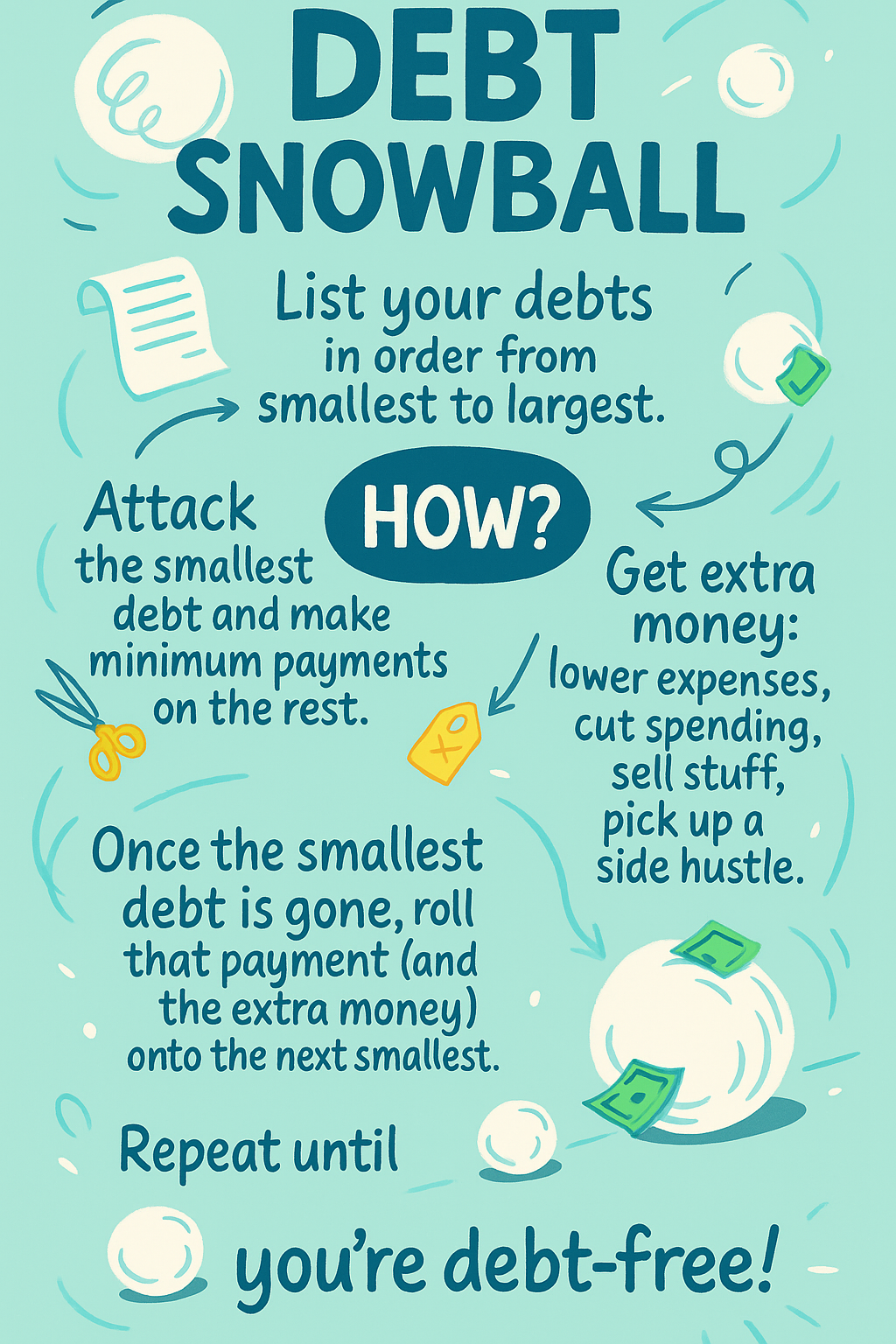
Snowball: Pay the smallest balance first for quick wins and momentum.
Avalanche: Pay the highest interest rate first to minimize total interest paid.
Why these work
Both methods keep minimums on all debts, and focus extra cash on one target balance at a time. When that target is gone, you roll its payment to the next target. The difference is what you target first, smallest balance, or highest interest.
Which should you choose?
Choose Snowball if motivation and visible progress help you stay consistent. You will rack up early wins, which keeps you engaged and on track.
Choose Avalanche if you are numbers-driven and patient. You will usually pay less interest overall, even if the first win takes longer.
We have generally favored the Snowball method as it gets you out of debt faster than any other debt reduction strategy. The key is to freeze any addition of new debt, cut expenses ruthlessly, and attack debt as much as possible.
7-Day Quick Start
Day 1–2: List every non-mortgage debt, balance, minimum payment, interest rate.
Day 3: Pick your method, snowball or avalanche, and the first target.
Day 4: Set an automatic “debt killer” transfer every payday.
Day 5–6: Trim one recurring cost, add those dollars to your target.
Day 7: Celebrate progress, schedule a 15-minute weekly check-in to review and roll payments.
Check out this video for a more in-depth review of the Snowball method:
Most debt hurts more than it helps, the difference comes down to why you borrow and how repayment works. In uncertain markets, quick loans can feel like relief, yet they often turn today’s stress into tomorrow’s interest bill. Use this simple guide to tell good debt from bad.
✅ Good Debt, Rare but Useful: Investment Debt
Purpose: Buy an asset that reliably earns more than the loan costs.
When it’s OK: The asset’s cash flow covers principal and interest, with a cushion, even if sales slow.
Examples: Capacity-boosting equipment, a carefully modeled acquisition.
Red flags: “Volume will fix it,” “We’ll figure out repayment later.”
🚫 Debt to Avoid, Most Common: Operating-Gap Debt
Timing debt: Using lines of credit or credit cards to “bridge” receivables. Timelines slip, balances linger, interest eats your margin.
Frivolous debt: Quick advances, for example Stripe or QuickBooks, credit cards, or factoring to cover payroll, rent, routine bills. This creates no new revenue, adds fees, and amplifies next month’s stress.
What to Do Instead
Freeze new borrowing while you stabilize.
Build a timing reserve: Sweep 1–5% of every deposit into a separate account, be your own bank.
Snowball payoff: Pay minimums on all debts, attack the smallest principal first, roll those payments forward.
Bottom Line
Borrow to build value, not to buy time. If the asset cannot repay the loan by itself, with room to spare, do not sign.
Want Help Paying Off Debt Faster?
If you would like a tailored payoff plan, including a snowball schedule, vendor renegotiation scripts, and reserve setup, schedule a free strategy session below.
“Ask me 20 questions to get to know my voice, goals, and style.”
Answer in detail. This helps the AI learn your tone and thought process, so future interactions are that much smoother.
In This Issue
Why AI Matters for Today’s Businesses
My Personal AI Journey—and How It Changed My Workflow
Practical Ways AI Can Help You Work Smarter (Even If You’re a Small Team)
Addressing Accuracy & Authenticity Concerns
It seems like we cannot go a day without hearing about artificial intelligence anymore. I used to be skeptical. I wasn’t sure how well it could capture my voice or bring real value to my daily operations. But after months of experimenting with AI tools—like ChatGPT—I’m convinced they’re not just nice-to-have; they’re essential for staying competitive. Whether it’s researching faster, drafting emails, brainstorming strategy, or creating content that resonates, AI has become a powerful ally for building a resilient business.
My Personal AI Journey
A few months ago, I started small with ChatGPT. At first, the results were clunky and often robotic. But I soon realized the key: the more context I gave—about my brand, my tone, and my goals—the better it became. Over time, ChatGPT began to sound like me. Now, instead of hours rewriting, I get accurate, persuasive drafts in seconds—needing only minor edits.
5 Ways You Can Use AI to Streamline Your Small Business
Content Creation & Editing: Draft blog posts, newsletters, or social media, then fine-tune in your own voice.
Customer Communication: Automate FAQs or simple inquiries, freeing up time for complex needs.
Idea Generation & Strategy: Use AI as a creative partner for new product ideas or marketing angles.
Admin & Scheduling Help: AI-powered tools can manage calendars, appointments, and to-do lists.
Data Insights: Many tools now include built-in AI to spot trends, forecast sales, or flag inefficiencies.
Addressing Accuracy & Authenticity Concerns
People often worry that AI sounds robotic or inaccurate. I felt the same at first. The truth is, AI can make mistakes if left on autopilot. But it’s a learn-by-doing tool. The more I guided it with my tone, preferences, and corrections, the better it became. Now, it feels like an extension of my thinking. In other words, AI becomes more “human” the more human guidance it receives.
The Bottom Line
AI isn’t just a flashy trend. It’s a tool that can supercharge your efficiency, creativity, and competitive edge—once you train it. Don’t stay stuck while others move forward. Embrace AI now, and watch it help you work smarter, not harder. With authenticity in your hands, AI becomes an invaluable assistant that amplifies your voice, not replaces it.
Ready to get actionable insights into your business’s strengths and weaknesses? Take our free Business Health Assessment to receive personalized recommendations and a clear roadmap to improve your company’s health.
Pick a weekly time to review your numbers, and write down one insight you will act on.
Turn on an automatic profit transfer for every deposit, even 1% to start.
Cancel, downgrade, or renegotiate one fixed cost this week.
Small moves, done consistently, build a business that can take a punch and keep moving forward.
In This Issue
Has volatility hit your pipeline? Why it doesn’t have to sink your business
The 3 keys to a resilient, “recession-proof” company
Client story: profits up, despite a bumpy year
How to start protecting your business this week
When the Economy Gets Choppy
This year has been a rollercoaster, tariffs moving targets, global conflicts, jittery markets. Many of our clients in elective industries, events, lawn care, and specialty services, have seen slower lead flow in 2025 than in 2024. The result can be brutal: cash gets tight, confidence dips, and the stress follows you home.
But a downturn doesn’t have to dictate your destiny. Regardless of where you are today, you can reduce the risk, and blunt the impact of economic swings, by tightening three fundamentals.
The 3 Keys to a Resilient Business
Visibility: Get your finger on the pulse, early. When you clearly understand where money is coming from, where it is going, and which trends are forming, you can act before issues escalate. Visibility means you can read your financials, not just receive them, spot shifts in sales and spending, and separate signal from noise. Without that clarity, you only “see” the problem when it is already a cash crisis, and by then you are in damage-control mode, not strategy mode.
Profitability: Treat profit as the primary health metric, not revenue. Top-line growth feels good, but bottom-line profit pays your personal bills and funds your future. When profit is secured up front, Profit First style, you gain decision freedom, time to work on the business, and the resilience to absorb shocks. In volatile markets, margin discipline beats volume every time.
Lean Overhead: Keep fixed costs light and flexible. Variable costs fall when revenue dips, fixed costs generally do not. Heavy overhead often crushes companies in a downturn. A lean, optimized cost base gives you room to breathe and time to adapt. Audit every recurring commitment, keep what creates value, renegotiate what is mispriced, and remove what is unnecessary.
A Client Story: Profits Up in a Down Year
One client runs an event-management company, an industry that lives and dies by discretionary spending. 2025 started choppy: cautious customers, longer decision cycles, fewer inbound leads. Seven months in, we reviewed their year-to-date numbers and found something surprising: profitability had doubled versus the same period in 2024.
What changed?
Visibility first. We established a rhythm of reviewing financial statements and cash trends so the owner could see small shifts early and make targeted adjustments.
Profit secured up front. We implemented Profit First, automated allocations for profit, owner pay, tax, and operating expenses on every deposit, so profit would not be an afterthought.
Seasonal reserve, by design. We calculated the exact monthly cash needed for fixed costs. Once monthly sales covered that number, including profit, tax, and owner’s pay targets, every extra dollar flowed into a reserve account to fund months where revenue was not sufficient to cover fixed costs.
Overhead overhaul. Line by line, we evaluated vendors and spend for actual value. We looked for value in every dollar spent and cut or reduced anything that was not providing sufficient value. The result: a 50% reduction in overhead year over year, without hurting client experience.
The outcome: more cash in reserve, six months and growing, healthier margins, and real peace of mind. With stability restored, we are mapping a plan for 2026—on offense, not defense.
How to Start This Week
Book an hour with your numbers. Do not just look, interpret. What changed in sales mix, pricing, job costs, or overhead over the last 60 days?
Protect profit. Even 1–2% to start creates momentum and confidence.
Trim fixed costs. One unnecessary recurring commitment removed is relief every single month.
The Bottom Line
You cannot control tariffs, headlines, or market jitters. You can control seeing the truth in your numbers early, locking in profit before you spend, and keeping overhead agile. Do those three things consistently and volatility becomes a headwind you are built to handle, not a wave that knocks you over.